Couples, who are planning for their IVF treatment in UAE (United Arab Emirates), need to consider many things before finalising specific IVF centre for their treatment. Factors such as – the entire procedure of IVF, the complete breakdown of IVF cost in UAE (United Arab Emirates) 2025, also a couple is required to ask whether the cost of medication is included in the package of IVF or need to be paid additional, etc.
IVF is also termed as Test Tube Baby treatment, where the embryos are created outside of the human body. It’s always been accomplished in a nutrient containing (or Petri) dish under the guidance of fertility veterans. IVF is not a single step procedure; instead, it takes multiple steps for completing a single IVF cycle, and thus the cost of IVF in UAE is not that cheap like other basic fertility treatments. However, some medical tourism companies provide far affordable IVF cost in UAE along with the best experience during the procedure.
Select IVF UAE is one of the leading Medical Tourism Facilitators that serves the best IVF treatment along with the highest success rate. The cost structure of this centre offers the most affordable package of IVF treatment in the UAE. IVF hospitals and centres under Select IVF UAE provide a decent success rate with all the authentic and genuine package of IVF.
When a couple visits the best IVF centre in UAE to conceive a baby at that time the senior fertility expert takes a thorough medical history in an initial consultation which is followed by the series of detailed medical tests and an ultrasound scan. Once the specialist gathers all the information, the team will do an in-depth analysis and will plan an IVF treatment accordingly, where the group of IVF centre will provide an estimated cost of IVF treatment. The cost of IVF treatment will vary, and it depends on the treatment selected and on the age and health of the couple.
International patients are welcomed warmly at Select IVF UAE, and the reason that most of the people are attracted to UAE from all over the world because of the reasonable and affordable IVF cost in UAE (United Arab Emirates), not only the price is reasonable in UAE but also you will get the best quality services and treatment at the best IVF Centre in UAE.
Cost of IVF in UAE using own eggs
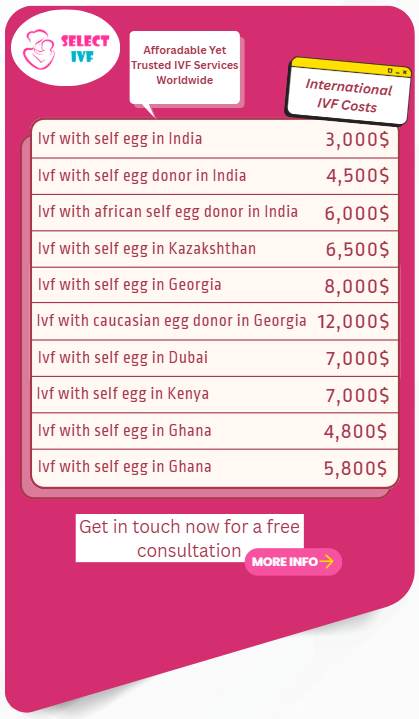
The estimated IVF Cost in UAE is USD 7000– USD 8000 using the self eggs and own sperm. This procedure is very reasonable because here, the senior fertility expert collects the eggs from the woman’s ovaries and mixes them with your husband sperm to facilitate fertilization. Once the fertilization occurs, the embryologist will select and transfer the best-chosen embryo into your uterus and will wait for the pregnancy symptoms.
After two weeks of embryo transfer, you need to visit Select IVF UAE clinic for the pregnancy test, and if the results are positive then you will be handed over to local Obstetricians, and Gynaecologists in your home country and the fertility expert will ensure that you need to travel UAE for just a few days for the procedure. However, if, your pregnancy does not occur, then you can repeat your IVF cycle, or you can choose other assisted reproductive treatment to conceive a baby. A couple, if undergoing multiple IVF cycles, then the IVF Cost in UAE becomes a bit high because of medication costs and the lab charges.
| Steps that take place in IVF treatment | IVF Cost in UAE |
| Initial consultation with the fertility expert Starting the medication of ovary stimulation and hormonal injections Ultrasounds Blood work Fertility lab charges Egg retrieval Fertilization Embryo transfer | USD 7,000 |
NOTE – The fertility centre or IVF centre in UAE also provide IVF treatment with ICSI at the same cost of IVF (in the package of IVF only), there is hardly any additional cost that needs to be paid by the couple for ICSI during their IVF Cycle.
Overview of IVF Costs in the UAE
The cost of IVF in the UAE varies depending on the clinic, the complexity of the case, and the additional procedures involved. In 2025, the average cost for a standard IVF cycle in the UAE ranges between AED 25,000 to AED 40,000. This estimate typically includes:
- Initial consultation and diagnostic tests
- Ovarian stimulation medications
- Egg retrieval and fertilization
- Embryo transfer procedure
However, certain cases may require additional services such as genetic testing, advanced embryo freezing, or donor sperm/eggs, which can increase the total cost.

Factors Influencing IVF Costs in the UAE
Several factors contribute to the overall cost of IVF treatments in the UAE. These include:
1. Clinic and Specialist Expertise
Renowned fertility clinics with highly experienced specialists may charge higher fees due to their success rates and advanced facilities.
2. Medications
Ovarian stimulation medications can account for a significant portion of the cost. These medications vary based on the patient’s age, ovarian reserve, and treatment protocol.
3. Additional Procedures
Some patients may require complementary procedures such as intracytoplasmic sperm injection (ICSI), preimplantation genetic testing (PGT), or assisted hatching, which can add to the total expense.
4. Use of Donor Sperm/Eggs
If donor gametes are needed, this will increase the overall cost of the IVF cycle.
5. Number of IVF Cycles
For some couples, a single IVF cycle may not result in a successful pregnancy, requiring multiple attempts and increasing the total investment.
6. Insurance Coverage
While the UAE has made significant strides in making fertility treatments more accessible, not all insurance plans cover IVF. Patients should check their policy for fertility treatment inclusions.
What Does the IVF Cost Include?
Understanding what is covered in the quoted cost is essential to avoid unexpected expenses. A typical IVF package in the UAE may include:
- Consultations and Initial Evaluations: Hormonal tests, ultrasounds, and other assessments.
- Ovarian Stimulation and Monitoring: Medications and frequent ultrasounds to monitor follicle growth.
- Egg Retrieval and Fertilization: Retrieval of mature eggs and fertilization in the lab.
- Embryo Transfer: Implanting the best-quality embryo(s) into the uterus.
Additional Costs:
- Freezing of surplus embryos
- Genetic testing (PGT/PGS)
- Donor services (if applicable)
- Costs associated with managing complications, if any
Is IVF in the UAE Affordable Compared to Other Countries?
While the cost of IVF in the UAE may seem higher compared to countries like India or Thailand, it is relatively affordable when compared to Western nations like the USA or the UK. Moreover, the UAE provides a luxurious medical experience with cutting-edge technology, high success rates, and the convenience of proximity for residents of the Middle East and neighboring regions.
Cost of IVF in UAE using egg donor eggs
An average cost of IVF using egg donor eggs in UAE (United Arab Emirates) is around USD 10,000 to USD 12,000 which is little expensive as compared to using own eggs procedure because this is a procedure where the fertility expert borrows the eggs from young, healthy and fertile women who are under the age of 28 years and will fertilize her eggs with the sperms of intended father to facilitate fertilization. Once fertilization occurs, the resulted embryo will be placed into the uterus of the intended mother. This procedure includes the cost of the IVF, fees of fertility expert and embryologist, charges of egg pick-up, compensation of egg donor, etc.
Factors that influence the IVF Cost in UAE
UAE is a country where medical insurance coverage is provided for IVF treatment at Select IVF UAE. The success rate of the UAE has always touched the sky for its progressive rate and exceptional treatment performed by the veteran team of Select IVF UAE. The IVF cost in the UAE is covered partially or wholly will depend upon your provider. So, we suggest to all our patients that please contact our IVF centres in UAE (United Arab Emirates) to inquire about the insurance policy that whether we accept your insurance provider for IVF treatment or not.
The IVF cost in UAE depends upon the case of the infertile couples and their age. For instance, if the woman’s egg lacks the quality of being fertilized with the sperm, then the couple, at this time, required to go for IVF treatment with donor egg. This will add extra costs in the couple’s IVF total bill and goes a bit expensive than conventional IVF treatment. Centre’s location, the experience of the senior IVF specialist, and the success rate also affect the cost of IVF treatment of respective IVF centre in UAE. So, a couple is suggested to choose any of the centres before analyzing all the perspective points for their IVF treatment.
Why Choose the UAE for IVF in 2025?
The UAE is a preferred destination for IVF for several reasons:
- Advanced Technology: The country’s fertility centers are equipped with the latest advancements in reproductive medicine.
- Experienced Specialists: Fertility doctors in the UAE are globally trained and bring years of expertise.
- Stringent Regulations: The UAE ensures that all fertility treatments are conducted under strict medical and ethical guidelines.
- Accessibility: Easy travel options and world-class infrastructure make the UAE a convenient choice for local and international patients.
- Personalized Care: Clinics in the UAE focus on patient-centric approaches, offering tailored treatments for maximum success rates.
How Select IVF Supports Your IVF Journey in the UAE
At Select IVF, we aim to provide comprehensive support for individuals and couples exploring fertility treatments in the UAE. Here’s why we are the trusted choice:
- Expert Consultation
We connect you with leading fertility specialists in the UAE, ensuring that your unique needs are addressed with personalized care. - Transparent Pricing
Select IVF believes in transparency. We guide you through the cost structure and help you understand the inclusions and exclusions in your treatment plan. - High Success Rates
By collaborating with top fertility centers in the UAE, we ensure access to treatments with proven success rates. - Comprehensive Services
From initial assessments to post-treatment care, Select IVF supports you at every stage of your journey. - Global Accessibility
With our international presence, we help coordinate treatment plans for patients traveling to the UAE for fertility care.
Tips for Managing IVF Costs in the UAE
- Compare Clinics: Research and compare costs at different clinics to find the best value for your investment.
- Insurance Inquiry: Check if your insurance policy covers fertility treatments.
- Ask About Packages: Many clinics offer cost-effective IVF packages that include multiple cycles or additional services.
- Plan Finances: IVF can be a significant financial commitment, so planning and budgeting are essential.
Conclusion
The cost of IVF in the UAE in 2025 reflects the advanced medical care, expertise, and cutting-edge technology available in the country. While it may seem like a significant investment, the emotional and practical rewards of achieving parenthood make it worthwhile for many couples. By partnering with Select IVF, you gain access to the best fertility care, guidance, and support in the UAE, ensuring that your journey is as seamless and stress-free as possible.
Let Select IVF help you turn your dream of parenthood into reality. The UAE’s fertility specialists and facilities stand ready to guide you every step of the way.
FAQs for IVF Cost in UAE (United Arab Emirates) 2025
1. What is the average cost of IVF in the UAE in 2025?
The average cost of a standard IVF cycle in the UAE ranges between AED 25,000 to AED 40,000, depending on the clinic, treatment complexity, and additional procedures like genetic testing or embryo freezing.
2. Are medications included in the IVF cost in the UAE?
Typically, the quoted IVF cost covers procedures like consultations, egg retrieval, and embryo transfer. However, medications for ovarian stimulation are usually charged separately and can add AED 5,000 to AED 10,000 to the total expense.
3. Does insurance cover IVF treatment in the UAE?
While some insurance plans in the UAE may offer partial coverage for fertility evaluations, most do not include IVF costs. It is essential to review your policy or inquire with your provider for specific details.
Read Also: