The most recent iteration of the Latest Surrogacy Law in India (2025) concerns couples considering starting a family. Out of the growing concerns regarding infertility and the need for a better understanding of the legal implications of Surrogacy in India, the recent amendments in the government policy legal framework are intended to provide legal clarity. The government has designed the new framework to provide all intended parents and surrogate mothers with a legal framework that is ethical, safe, and transparent.
Based on the Surrogacy Law in India, only altruistic Surrogacy is legal. This means surrogate mothers are prohibited from any “benefit” outside of reimbursement for their medical expenses and the insurance coverage that is necessary for her to incur. A primary assumption underlying the guidelines is to curb the exploitation of surrogate mothers. The laws impose strict medical, legal and eligibility guidelines for all couples and surrogate mothers.
Even though surrogacy is an element of Assisted Reproductive Techniques (ART), it is a more elaborate and delicate procedure. A lot of couples still have worries about eligibility, approvals, documentation, and, most importantly, the status of regulations regarding surrogacy. This guide breaks it down in the most articulate and simplest manner in relation to the most Recent surrogacy Law in India, eligibility criteria, criteria for the surrogates, and the workings of the surrogacy process in a sequential manner to the most simplist step to the most complete step
What is Surrogacy?
Surrogacy is a specialised method of assisted reproduction where a woman, known as the surrogate, carries a child on behalf of another couple or individual. Under the Surrogacy Law in India, the surrogate has no parental rights over the child and is not genetically connected to the baby (in gestational surrogacy). The intended parents become the legal parents of the newborn.
Many couples today explore Surrogacy in India due to medical problems, repeated IVF failures, absence of a uterus, genetic complications, or conditions that make pregnancy unsafe. As per the Latest Surrogacy Law in India, surrogacy is strictly regulated to ensure ethical practice and the safety of the surrogate mother and the child.

Types of Surrogacy
Surrogacy can be divided into different categories based on the biological connection with the child and the financial structure involved. However, the Latest Surrogacy Law in India allows only altruistic surrogacy.
1. Gestational Surrogacy (Legal in India)
Gestational surrogacy is the only legally permitted form of Surrogacy in India. Here, the surrogate carries an embryo created through IVF, but she has no genetic connection to the baby.
- An embryo is created using the egg and sperm of the intended parents or donors.
- Surrogate only carries the pregnancy.
- Considered medically safe and legally clearer.
- Fully supported under the Surrogacy Law in India.
2. Traditional Surrogacy (Not Allowed in India)
Traditional surrogacy involves a surrogate who uses her own egg, making her the biological mother. This type was common years ago, but created emotional, legal, and parental disputes.
- The surrogate’s own egg is fertilised, giving her a genetic link to the child.
- Process is simpler medically but complex legally.
- Under the Latest Surrogacy Law in India, this method is banned due to high emotional and legal risks.
3. Commercial Surrogacy (Banned in India)
Commercial surrogacy involves financial compensation to the surrogate beyond medical expenses. Earlier, India was a hub for commercial surrogacy, but misuse and exploitation led to strict control.
- Surrogate receives direct payment for carrying the child.
- Detailed contracts include rights, responsibilities, and compensation.
- Surrogacy Law in India now bans this to prevent exploitation.
- Completely prohibited for both Indians and foreigners.
4. Altruistic Surrogacy (Legal in India)
Altruistic surrogacy is the only approved option under the Latest Surrogacy Law in India (2025).
- No commercial payment is given to the surrogate.
- Only medical, legal, and insurance expenses are covered.
- Usually arranged with a trusted relative or known person.
- Designed to protect the surrogate and ensure ethical Surrogacy in India.
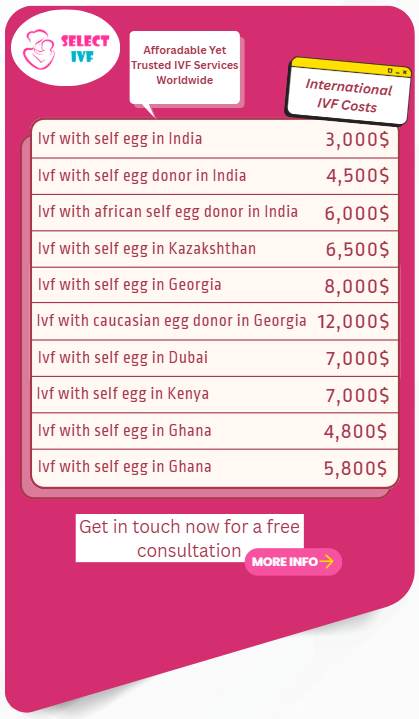
IVF cost in India (involved in surrogacy)
The typical IVF cost in India falls between ₹1,10,000 and ₹2,20,000 for each cycle. But keep in mind that’s just the starting point. Depending on what you need, extra procedures and tests can bump up the total cost. It really hinges on several factors, like the age of the couple, especially the woman, the number of IVF attempts needed to achieve success, the use of cutting-edge technology and techniques that can boost the success rate, and the experience and skill of the fertility doctors or IVF specialists involved.
Here’s a quick breakdown of the costs:
The following helps you understand the cost of IVF in India:
| Types of IVF treatment in India | The cost of IVF treatment in India (INR) |
| IVF with self-egg and sperm cost in India | INR 1,50,000 |
| IVF with ICSI cost in India | INR 1,65,000-1,85,000 |
| IVF with donor egg cost in India | INR 2,06,000-3,00,000 |
| IVF with donor sperm cost in India | INR 2,10,000 |
| IVF with Laser Assisted Hatching (LAH) cost in India | INR 2,10,000-2,20,000 |
| IVF with donor embryo cost in India | INR 2,05,000-3,00,000 |
| IVF with PGD technique cost in India | INR 3,00,000 |
The following will help you understand the IVF treatment cost in different states:
| States of India | Cost of IVF in different states of (INR) |
| IVF cost in India | INR 1,50,000 to INR 1,80,000 |
| IVF cost in Raipur | INR 1,40,000 to INR 2,00,000 |
| IVF cost in Delhi | INR 1,40,000 to INR 2,30,000 |
| IVF cost in Mumbai | INR 1,50,000 to INR 2,40,000 |
| IVF cost in Punjab | INR 1,00,008 to INR 2,00,000 |
| IVF cost in Haryana | INR 1,40,000 to INR 2,00,000 |
| IVF cost in Rajasthan | INR 1,50,000 to INR 2,00,000 |
| IVF cost in Uttar Pradesh | INR 1,40,000 to INR 2,10,000 |
| IVF cost in Madhya Pradesh | INR 1,40,000 to INR 2,20,000 |
| IVF cost in Dehradun | INR 1,40,000 to INR 2,00,000 |
| IVF cost in Bihar | INR 1,30,000 to INR 2,00,000 |
| IVF cost in Jharkhand | INR 1,40,000 to INR 2,00,000 |
| IVF cost in Assam | INR 1,20,000 to INR 1,80,000 |
| IVF cost in Gujarat | INR 1,40,000 to INR 2,80,000 |
| IVF cost in Tamil Nadu | INR 1,40,000 to INR 2,30,000 |
| IVF cost in Andhra Pradesh | INR 1,40,000 to INR 2,00,000 |
| IVF cost in Himachal Pradesh | INR 1,40,000 to INR 2,20,000 |
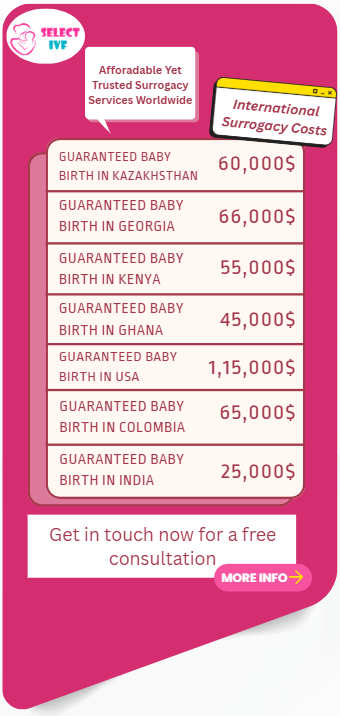
How much does surrogacy cost in India?
The awareness about the Surrogacy cost in India before the treatment is crucial. Knowledge of costs in advance helps individuals plan their budget and make wise decisions regarding surrogacy. Surrogacy cost in India varies on multiple factors such as surrogacy clinic location, the success rate of the clinic, age of the individuals as younger age individuals have lower costs, legal fees, medical procedure fees, surrogate mother charges, donor charges if required, additional procedure charges, etc., so the cost of surrogacy in India ranges from INR 1200000 to INR 2000000. However, this is an estimation; the actual cost varies depending on the individual condition and case.
With the help of the following table, you will understand the cost of surrogacy in India:
| Surrogacy Procedure in India | Cost of surrogacy in India (INR) |
| Surrogacy using own eggs & own sperm | Rs. 12 Lakh To 18 Lakh |
| Surrogacy by donor eggs and own sperm | Rs. 13 Lakh to 19 Lakh |
| Surrogacy with donor sperm and own eggs | Rs. 14 Lakh to 20 Lakh |
| Surrogacy (cost) & Embryo Transfer (Cost) | Up to Rs. 4 Lakh |
| Surrogate Mother Selection (Cost)+ Blood Tests (Cost) + Surrogate Mother Preparation (Cost) | Up to Rs. 2 Lakh |
| Normal Vaginal Delivery Cost | Up to Rs. 70,000 |
| Cesarean section or C-section Delivery Cost | Up to Rs. 1 Lakh to 2 Lakh |
| Housing for Surrogate mother (Cost) + Food (Cost) | Up to Rs. 3 Lakh |
The following will help you understand the surrogacy treatment cost in different states of India:
| States of India | Cost of surrogacy in different states of India (INR) |
| Surrogacy cost in Chennai | 12 to 20 lakh |
| Surrogacy cost in Hyderabad | 12 to 18 lakh |
| Surrogacy cost in Bangalore | 14 to 20 lakh |
| Surrogacy cost in Delhi | 13.4 to 23.7 lakh |
| Surrogacy cost in Mumbai | 14.65 to 24 lakh |
| Surrogacy cost in Punjab | 10.08 to 20 lakh |
| Surrogacy cost in Haryana | 12.64 to 20 lakh |
| Surrogacy cost in Rajasthan | 15.9 to 20 lakh |
| Surrogacy cost in Uttar Pradesh | 14 to 21 lakh |
| Surrogacy cost in Madhya Pradesh | 14 to 20.02 lakh |
| Surrogacy cost in Dehradun | 14.91 to 20 lakh |
| Surrogacy cost in Bihar | 13.5 to 20 lakh |
| Surrogacy cost in Jharkhand | 14 to 20 lakh |
| Surrogacy cost in Assam | 12 to 18 lakh |
| Surrogacy cost in Gujarat | 14 to 20.8 lakh |
| Surrogacy cost in Tamil Nadu | 14.47 to 23 lakh |
| Surrogacy cost in Andhra Pradesh | 14 to 20 lakh |
| Surrogacy cost in Himachal Pradesh | 14.06 to 20.62 lakh |
Is Surrogacy Legal in India for Foreigners?
According to the Latest Surrogacy Law in India, surrogacy is not legal for foreigners. India has completely restricted international or foreign surrogacy to prevent misuse and to ensure the safety of surrogate mothers. Only Indian married couples and certain categories of Indian citizens are allowed to opt for Surrogacy in India.
The updated Surrogacy Law in India clearly states that:
- Foreign nationals cannot undergo surrogacy in India
- OCI, PIO, and NRI individuals living abroad are also not eligible
- Surrogacy is allowed only for Indian heterosexual married couples
- Single men, foreign couples, and LGBTQ+ couples are not permitted
These restrictions were introduced after many commercial surrogacy cases, and ethical concerns came into light. The government now promotes altruistic surrogacy only, which involves no commercial payment and is strictly regulated.
In simple terms, foreigners cannot pursue surrogacy in India under any circumstances. Only Indians meeting the legal requirements can apply for surrogacy through the proper medical and legal process.
Surrogacy Rules in India 2025
The Latest Surrogacy Law in India (2025) provides a strict and well-defined legal process for couples who wish to grow their families through Surrogacy in India. The aim of the law is to ensure ethical practices, protect the surrogate mother, and prevent any form of exploitation. The legal procedure includes eligibility checks, documentation, medical approval, and final authorisation from the Surrogacy Board. Below is a simplified explanation of the legal pathway for both Indian and foreign-origin couples.
What is the Legal Procedure for Surrogacy in India?
Under the Surrogacy Law in India, the legal procedure is divided into two important parts:
- Fertility and medical steps (how the treatment is performed)
- Paperwork and legal approvals (what documents and permissions are required)
Here, we focus on the legal and documentation process as per the Surrogacy Rules in India 2025.
1. Legal Procedure for Indian Couples
Indian couples must meet all eligibility conditions stated under the Latest Surrogacy Law in India. They must also prove medical necessity before applying.
Eligibility Requirements
- Legally married for at least 5 years
- A woman must be aged 23–50 years
- Man must be aged 26–55 years
- A valid infertility certificate from a government-authorised IVF specialist
Documents Required
- Aadhar card and PAN card of both partners
- Marriage certificate
- Proof of age and residence
- Medical records and an infertility certificate
- Passport-size photographs of both partners
Surrogate Mother’s Eligibility
- Must be a close relative of the intended couple
- Aged 25–35 years
- Must be married and have at least one biological child
- Can act as a surrogate only once in her lifetime
- Must provide:
- Aadhar card
- Marriage certificate
- Proof of relation
- Written consent and willingness affidavit
Approval from Authorities
Under the official Surrogacy in India rules:
- The couple applies to the State Surrogacy Board or the District Medical Board
- Submit all documents, medical proofs, and the surrogate’s details
- Receive two important documents:
- Certificate of Essentiality (medical need)
- Certificate of Eligibility (legal approval)
- A legally drafted surrogacy agreement must be notarised, confirming the surrogate’s consent and no parental rights
2. Legal Procedure for NRI and OCI Couples
NRI and OCI cardholders are eligible for surrogacy, but only under strict conditions outlined in the Latest Surrogacy Law in India.
Eligibility Conditions
- Must be legally married
- Must reside in India for at least 12 months before applying
- Must present a medical infertility certificate from a registered Indian clinic
Required Documents
- Valid OCI/NRI certificate
- Passport and visa copies
- Marriage certificate
- Proof of stay in India
- Infertility certificate from an Indian IVF specialist
Approval Steps
- Apply to the District Surrogacy Board
- Submit all required documents
- Receive Essentiality and Eligibility Certificates
- Sign and notarise a legal surrogacy contract in India
- Surrogate must meet the same conditions as for Indian couples
Post-Birth Legal Steps (for NRI/OCI)
After the baby is born, NRI and OCI parents must complete:
- Application for the child’s birth certificate
- FRRO exit clearance
- Passport processing for the newborn
- All stages must be documented legally and transparently
Who Can Opt for Surrogacy in India?
The Latest Surrogacy Law in India (2025) clearly defines who is eligible for surrogacy and who is not. These rules were created to protect the surrogate mother, avoid commercial misuse, and ensure that Surrogacy in India is used only for genuine medical needs. Only couples who meet strict legal and medical conditions can apply.
Under the Surrogacy Law in India, the following people are allowed to opt for altruistic surrogacy:
1. Legally Married Indian Couples
This is the primary category permitted for Surrogacy in India.
Eligibility Conditions
- Must be legally married for at least 5 years
- Female partner must be 23–50 years old
- The male partner must be 26–55 years old
- Must provide an infertility certificate from a government-approved IVF specialist
- Surrogacy is allowed only for medical reasons, not for convenience
2. NRI and OCI Married Couples (With Restrictions)
As per the Latest Surrogacy Law in India, NRI and OCI couples can apply only if:
- They are legally married
- They have stayed in India for a minimum of 12 months before applying
- They provide infertility proof from an Indian clinic
- They follow the same rules as Indian couples
- Only altruistic surrogacy is allowed for them
3. Couples With Proven Medical Infertility
Surrogacy is permitted only when natural conception is not possible.
Allowed medical conditions include:
- Absence of a uterus
- Recurrent pregnancy loss
- Severe medical conditions where pregnancy is unsafe
- Repeated failed IVF cycles
- Genetic conditions that may harm the mother or baby
The Surrogacy Law in India requires a government-authorised doctor to certify the medical necessity.
Who Cannot Opt for Surrogacy in India?
Under the Latest Surrogacy Law in India, these categories are NOT eligible:
- Foreign nationals
- Unmarried women or men
- Live-in partners
- LGBTQ+ couples
- Couples married for less than 5 years
- Couples without medical infertility
- Commercial surrogacy seekers
These restrictions ensure that Surrogacy in India remains ethical and non-commercial.
Current Status of Surrogacy in India
The Current Status of Surrogacy in India is governed by the Latest Surrogacy Law in India (2025), which makes the process highly regulated, ethical, and strictly monitored. Under this law, only altruistic surrogacy is permitted. This means the surrogate mother cannot receive any commercial payment other than medical care, insurance, and necessary expenses.
Surrogacy in India is allowed only for Indian married couples, NRI couples, and OCI cardholders, and they must meet specific legal and medical conditions. Foreign nationals, same-sex couples, and single individuals are not allowed to pursue surrogacy in the country. The surrogate must be a close relative, married, and must have at least one biological child of her own. These rules aim to prevent exploitation and ensure safe and ethical surrogacy practices.
Overall, the current surrogacy framework in India focuses on transparency, the protection of surrogate mothers, and the genuine medical needs of the intended parents.
Important rules of Surrogacy in India (2025)
- Only altruistic surrogacy is legal in India.
- Commercial surrogacy is completely banned across the country.
- Allowed only for Indian, NRI, and OCI married couples.
- Couples must be legally married for at least 5 years.
- The surrogate must be a close relative, married, and 25–35 years old.
- The surrogate must have one biological child and can be a surrogate only once.
- Foreigners, same-sex couples, and single individuals are not eligible for surrogacy in India.
- Approval from the District Medical Board is mandatory.
- All steps must follow legal documentation, medical justification, and ethical guidelines as per the Latest Surrogacy Law in India.
What is Surrogacy Law in India?
The Surrogacy Law in India, updated under the Latest Surrogacy Law in India (2025), allows only altruistic surrogacy. This means the surrogate mother cannot receive any commercial payment except medical care, insurance, and essential expenses. The law is designed to protect surrogate mothers, ensure ethical practices, and support couples who genuinely need medical help to have a child.
Under the current rules, Surrogacy in India is allowed only for Indian married couples, NRI couples, and OCI cardholders, provided they meet age limits and infertility criteria. Foreign nationals, single individuals, and same-sex couples are not permitted to pursue surrogacy.
The law strictly defines who can be a surrogate: she must be a close relative, 25–35 years old, married, and must already have at least one biological child. Detailed medical, psychological, and legal screenings are mandatory before the approval process.
Overall, the Surrogacy Law in India aims to maintain transparency, prevent exploitation, and create a safe, legal process for eligible couples.

What is the success rate of surrogacy in India?
The success rate of surrogacy in India depends on multiple reasons, including the age of the couple and the surrogate mother, the infertility cause, the number of IVF attempts involved in surrogacy, the use of advanced technology, skilled and highly proficient doctors and nurses, and the quality of egg and sperm. So all these things that we mentioned earlier can affect the success rate of surrogacy in India. The success rate of surrogacy in India ranges between 70 to 98%. If the centre or hospital has potential, then the success rate can increase to 100%.
With the help of the following table, you will understand the surrogacy success rate in India:
| Surrogacy treatment in India | Success rates of surrogacy in India |
| Surrogacy with self-eggs | 50 to 90% |
| Surrogacy with self-sperm | 55 to 80% |
| Surrogacy with donor eggs | 70 to 95% |
| Surrogacy with donor sperm | 73 to 97% |
| Surrogacy with FET | 60 to 65% |
| Surrogacy with ICSI | 50 to 65% |
Why opt for Select IVF?
We understand how difficult it is to select the best option for your infertility treatment, but do not get tense, as one of the best options is going to be suggested to you, where the patient collaborates with highly experienced and qualified doctors. The patient will find it comfortable as the staff will always stand by them, away from all the worries that come to their mind. We offer all types of infertility treatment, so contact us today! To start, consider the following factors while selecting a location:
i. The patient-focused assistance of the centre
ii. Professionals with extensive education and experience
iii. Infrastructure that is well-built for maximum comfort and happiness
iv. The entire medical staff treats you with respect
v. Assists you throughout the entire process from the beginning
vi. Offers transparent fees and processes
You have the option of choosing surrogacy for all of these! So, reach out to us at +91- 8447592299 | Email ID: info@www.selectivf.com
Conclusion
The Latest Surrogacy Law in India (2025) has created a strict but fair system that protects both intended parents and surrogate mothers. By allowing only altruistic surrogacy, the government aims to promote ethical practices, ensure medical safety, and avoid the misuse of commercial surrogacy. Although the rules are detailed and the eligibility criteria are tight, the process is transparent and secure for those who genuinely need medical support to build a family.
For Indian, NRI, and OCI couples facing infertility, Surrogacy in India continues to be a reliable and legally protected option, provided all guidelines, documents, and approvals under the Surrogacy Law in India are followed correctly.
Frequently Asked Questions (FAQs)
1. Is surrogacy legal in India in 2025?
Yes. Surrogacy is legal, but only altruistic surrogacy is allowed. Commercial surrogacy is fully banned under the Latest Surrogacy Law in India (2025).
2. Who is eligible for surrogacy in India?
Only Indian married couples, NRI couples, and OCI cardholders who have proven infertility and have been married for at least 5 years can opt for surrogacy.
3. Can foreigners opt for surrogacy in India?
No. Foreign nationals are not allowed to pursue Surrogacy in India under the current law.
4. Who can become a surrogate according to the Surrogacy Law in India?
A surrogate must be a close relative, aged 25 to 35, married, medically fit, and must have at least one biological child.
5. Is commercial payment allowed in surrogacy?
No. The Surrogacy Law in India strictly bans all forms of commercial surrogacy. Only medical expenses, insurance, and essential costs can be provided.
6. What approvals are required before starting the surrogacy process?
Intended parents must obtain two certificates from the District Medical Board:
Certificate of Essentiality (infertility proof)
Certificate of Eligibility for both the couple and the surrogate
All steps must follow the guidelines of the Latest Surrogacy Law in India (2025).
Read Also: